
Employing an Artificial Intelligence Agent in Teaching and Learning Arabic: A Descriptive, Experimental, and Analytical Study
Article Sidebar
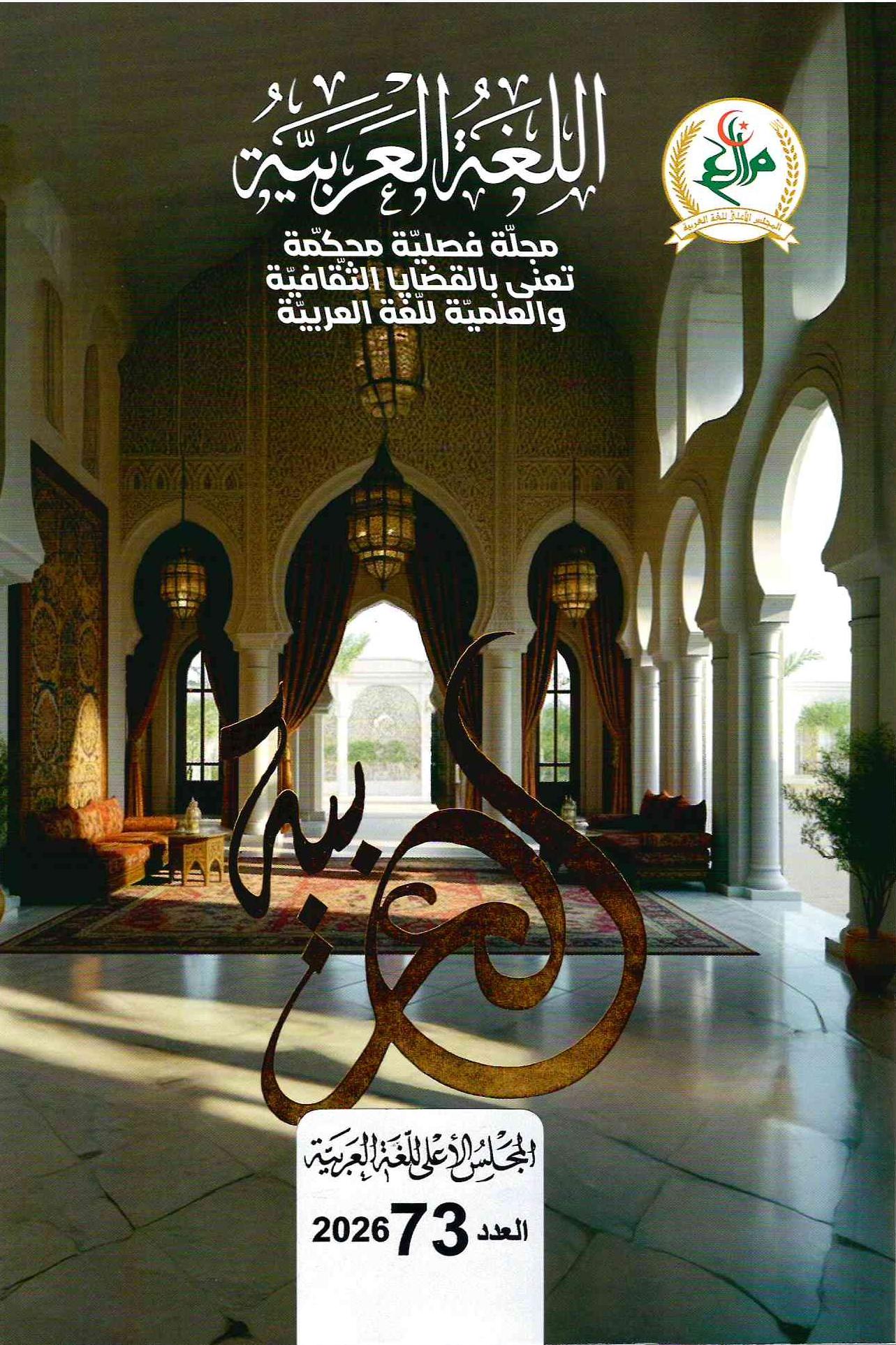
Main Article Content
Abstract
This study explores the role of the artificial intelligence agent in teaching and learning Arabic, focusing on its benefits, challenges, and future opportunities. It highlights the agent’s capacity to enhance pronunciation, grammar, listening, and reading skills, while also personalizing content to meet learners’ individual needs. Using a descriptive-analytical approach supported by practical examples, the research found that AI facilitates Arabic learning, increases learners’ motivation, and fosters an interactive educational environment. The study concludes that developing applications specifically designed for Arabic instruction will yield better long-term results, and it recommends integrating AI technologies into curricula, supported by educational policies and adequate training for teachers and students, thus opening new horizons for future research in this field.
Article Details

This work is licensed under a Creative Commons Attribution-NonCommercial 4.0 International License.




References
1- Samin, S. M., & Osman, R. A. (2024). Integrating Artificial Intelligence into the Arabic Language Teaching Plan at Higher Education. SHS Web of Conferences, 202, 06010.
2- ناشف، س. م. (2024). تأثير تطبيقات الذكاء الاصطناعي على تعليم اللغة العربية لطلبة الحلقة الأولى. مجلة العلوم التربوية والنفسية، 18(1)، 15-31.
3- Li, B., To, Y. L., Wang, C., & Low, V. (2025). Two years of innovation: A systematic review of empirical generative AI research in language learning and teaching. ScienceDirect.
4- Russell, S. J., & Norvig, P. (2010). Artificial Intelligence: A Modern Approach (3rd ed.). Prentice Hall.
5- Cheon, G., Choi, Y., Lee, D., & Baek, J. (2025). Generative AI agents in language learning: A randomized field experiment. ScholarSpace.
1- Samin, S. M., & ‘Uthmān, R. A. (2024). Integrating Artificial Intelligence into the Arabic Language Teaching Plan at Higher Education. SHS Web of Conferences, 202, 06010.
2- Nāshif, S. M. (2024). Ta’thīr taṭbīqāt al-dhikā’ al-iṣṭinā‘ī ‘alā ta‘līm al-lugha al-‘Arabiyya li-ṭullāb al-ḥalqa al-ūlā. Majallat al-‘ulūm al-tarbawiyya wa-al-nafsiyya, 18(1), 15-31.
3- Li, B., To, Y. L., Wang, C., & Low, V. (2025). Two years of innovation: A systematic review of empirical generative AI research in language learning and teaching. ScienceDirect.
4- Russell, S. J., & Norvig, P. (2010). Artificial Intelligence: A Modern Approach (3rd ed.). Prentice Hall.
5- Cheon, G., Choi, Y., Lee, D., & Baek, J. (2025). Generative AI agents in language learning: A randomized field experiment. ScholarSpace.